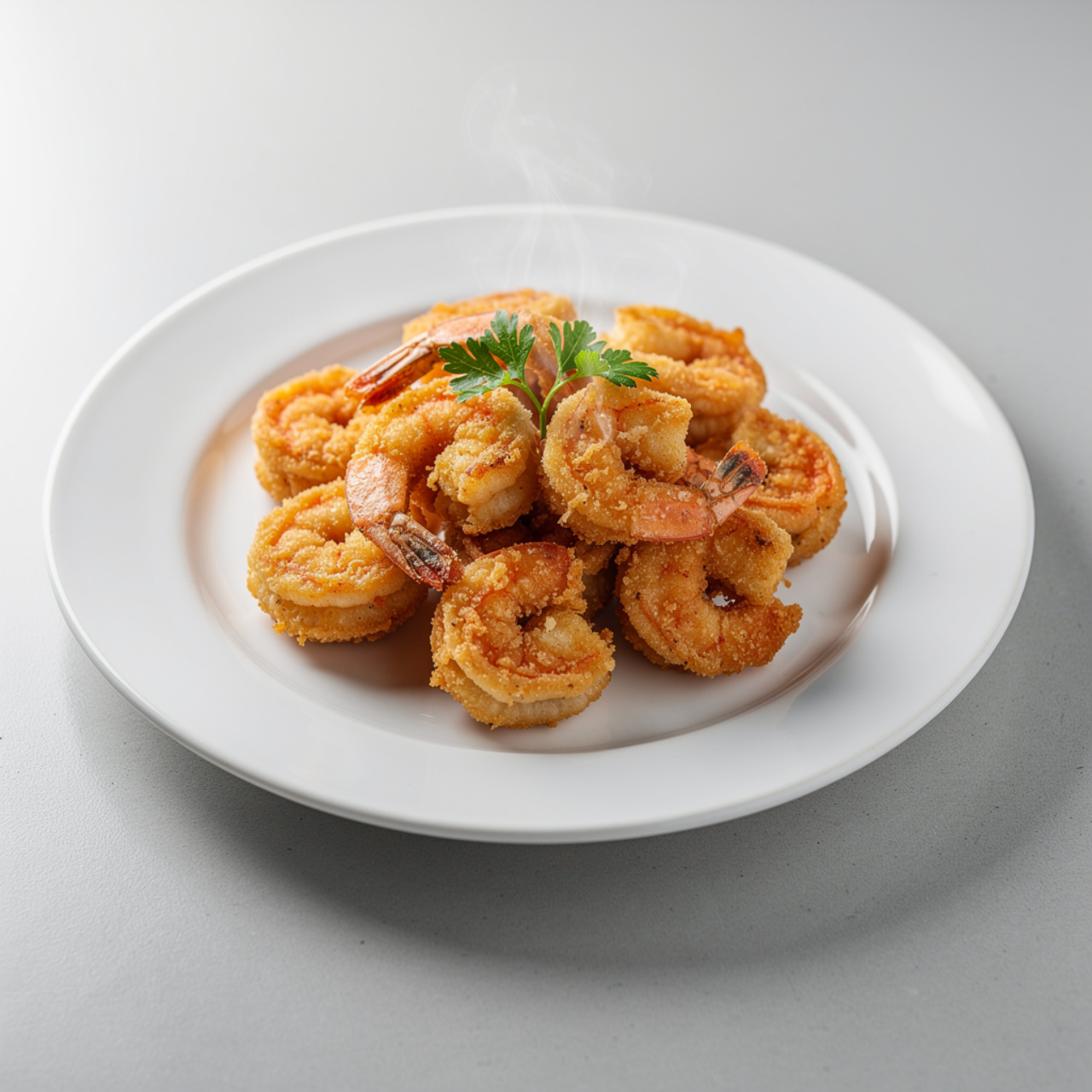
Southern Fried Shrimp: Crispy, Golden, and Irresistible
This Southern Fried Shrimp recipe delivers perfectly crispy, golden shrimp with a seasoned cornmeal and flour coating that will rival any restaurant version. Quick, easy, and packed with flavor, it is the ultimate fried seafood recipe for any night of the week.

The Only Southern Fried Shrimp Recipe You Will Ever Need
There is something deeply satisfying about a plate of perfectly fried shrimp. The kind with a coating so crispy it shatters at the first bite, seasoned just right, with juicy, sweet shrimp inside that practically snap when you eat them. This Southern Fried Shrimp recipe delivers exactly that, every single time, whether you are feeding a hungry family on a Tuesday night or putting out a spread for a backyard seafood fry.
If you have ever ordered fried shrimp at a restaurant, maybe something close to Cracker Barrel fried shrimp or the kind of golden, seasoned baskets you find at coastal Southern seafood joints, and wondered how to recreate that at home, this is your answer. The secret is a combination of seasoned flour and cornmeal for the coating, a quick buttermilk soak to help everything cling, and a few key spices that elevate it well beyond a plain shrimp fry recipe.
Why This Southern Style Shrimp Recipe Works
A lot of homemade fried shrimp recipes produce results that are either too thick and doughy, too pale, or so lightly seasoned that the coating tastes like nothing. This recipe solves all three problems.
Here is what makes it different:
- Cornmeal in the dredge. Unlike an all-flour coating, adding fine or medium cornmeal gives the crust a distinctive texture and subtle crunch that holds up even as the shrimp cool slightly. It is part of what gives Southern style shrimp their character.
- Buttermilk soak with hot sauce. Soaking the shrimp briefly in cold buttermilk tenderizes them gently and creates a slightly tacky surface that the seasoned dredge grabs onto. A splash of hot sauce in the soak is optional but adds a quiet background heat without making the finished dish spicy.
- Smoked paprika and Old Bay. This combination does more work than most people realize. Together they give the coating a warm, slightly smoky depth that makes people wonder what your secret ingredient is.
- Oil temperature control. Frying at a steady 350 degrees F is non-negotiable. Too cool and the shrimp absorb oil and turn greasy. Too hot and the coating burns before the shrimp cook through.
Chef's Tip: Pat your shrimp completely dry before they go into the buttermilk soak. Excess moisture from the shrimp themselves is one of the biggest reasons coatings fall off during frying. Dry shrimp plus a good soak equals a coating that actually sticks.
The Right Tools and Ingredients Make the Difference
For a fried seafood recipe like this one, having a reliable thermometer and a heavy-bottomed pan is genuinely worth it. Consistent oil temperature is the single biggest factor between greasy, soggy shrimp and the crispy golden results you are after. A wire rack over a sheet pan is equally important for keeping finished batches hot and crunchy while you fry in rounds.
Choosing the Best Shrimp for Frying
For this recipe, large or extra-large shrimp (16 to 20 count per pound) are ideal. They are big enough to stay juicy inside while the coating crisps up outside, and they look beautiful on a plate. Smaller shrimp tend to overcook before the coating reaches its full golden color.
Fresh shrimp are wonderful if you have access to them, but high-quality frozen shrimp, thawed overnight in the refrigerator, work just as well. Look for shrimp that are peeled and deveined to save time, though leaving the tails on is a classic Southern presentation.
A quick note on wild-caught versus farmed: Wild-caught Gulf shrimp have a firmer texture and a sweeter flavor that shines in a shrimp fry recipe. If you can find them, they are worth the extra cost for a dish where the shrimp are the star.
Serving Ideas and What to Pair It With
Southern Fried Shrimp are endlessly versatile. Here are a few ways to serve them:
- Classic plate lunch: Serve alongside creamy coleslaw, hush puppies, and French fries for a full Southern seafood platter.
- Shrimp po boy: Pile them into a toasted hoagie roll with shredded lettuce, sliced tomato, pickles, and remoulade sauce.
- Fried shrimp and chicken combo: Mix a batch of these with your favorite fried chicken pieces for a surf-and-turf fry that feeds a crowd. Think of it as the homemade version of a fried shrimp and chicken platter.
- Appetizer spread: Serve as a starter with cocktail sauce and lemon wedges for dipping, similar to a flash fried shrimp appetizer at a seafood restaurant.
- Taco night: Stuff into warm corn tortillas with avocado, pickled red onion, and a drizzle of chipotle crema for a creative spin.
Serving Tip: Always season fried shrimp with a pinch of salt the moment they come out of the oil, while the coating is still hot. That is when the seasoning adheres best and every bite tastes properly finished.
A Few Notes on Variations
This recipe is a solid Southern foundation, but it adapts beautifully. For a hard crab inspired coating similar to what you might find on fried hard crab recipes from the Chesapeake region, increase the Old Bay to 2 teaspoons and add a pinch of celery salt to the dredge. For an Olive Garden fried shrimp recipe style, dial back the cayenne, add a teaspoon of Italian seasoning, and serve with marinara alongside the lemon.
For gluten-free Southern fried shrimp, replace the all-purpose flour with a 1-to-1 gluten-free flour blend and keep the cornmeal as is. The result is nearly identical in texture and just as satisfying.
Ready to make the crispiest, most flavorful Southern Fried Shrimp of your life? Here is the full recipe:
Southern Fried Shrimp: Crispy, Golden, and Irresistible
This Southern Fried Shrimp recipe delivers perfectly crispy, golden shrimp with a seasoned cornmeal and flour coating that will rival any restaurant version. Quick, easy, and packed with flavor, it is the ultimate fried seafood recipe for any night of the week.
Ingredients
- 1 1/2 lb large shrimp, peeled, deveined, tails on or off
- 1 cup all-purpose flour
- 1/2 cup yellow cornmeal, fine or medium grind
- 1 cup buttermilk, cold
- 2 large eggs, beaten
- 1 tsp garlic powder
- 1/2 tsp onion powder
- 1 tsp smoked paprika
- 1/4 tsp cayenne pepper, adjust to taste
- 1 tsp Old Bay seasoning
- 1 tsp kosher salt, divided
- 1/2 tsp black pepper, freshly ground
- 3 cups vegetable oil, for frying, or enough to fill pan 2 inches deep
- 1 tbsp hot sauce, optional, added to buttermilk soak
- 1 fresh lemon, cut into wedges for serving
Instruction
Pat the shrimp completely dry with paper towels. This step is critical for getting a crispy coating that sticks properly.
In a medium bowl, whisk together the buttermilk, beaten eggs, hot sauce (if using), and 0.5 tsp of the kosher salt. Add the shrimp, toss to coat, and let them soak for 10 to 15 minutes in the refrigerator.
In a shallow dish or pie plate, whisk together the flour, cornmeal, garlic powder, onion powder, smoked paprika, cayenne, Old Bay seasoning, the remaining 0.5 tsp salt, and black pepper until evenly combined.
Pour the vegetable oil into a large, heavy-bottomed skillet or Dutch oven to a depth of about 2 inches. Heat over medium-high heat until the oil reaches 350 degrees F (175 degrees C). Use a thermometer for accuracy.
Working in batches, lift each shrimp from the buttermilk soak, letting the excess drip off, then dredge it thoroughly in the seasoned flour mixture, pressing gently so the coating adheres on all sides.
Carefully lower the coated shrimp into the hot oil in a single layer, making sure not to crowd the pan. Fry for 2 to 3 minutes per side, until deeply golden and cooked through.
Use a slotted spoon or spider strainer to transfer the fried shrimp to a wire rack set over a baking sheet. Do not stack them on paper towels straight away, as the steam can soften the crust.
Allow the oil to return to 350 degrees F between batches. Season the finished shrimp with a light pinch of salt immediately after frying.
Serve hot with lemon wedges, cocktail sauce, remoulade, or your favorite dipping sauce alongside.
Equipment
- Large heavy-bottomed skillet or Dutch oven
- Instant-read or deep-fry thermometer
- Wire rack with rimmed baking sheet
- Slotted spoon or spider strainer
- Shallow dish or pie plate for dredging
- Medium mixing bowl
- Paper towels
- Tongs
Notes
Storing and Reheating Leftovers
Fried shrimp are absolutely at their best fresh out of the oil, but if you have leftovers, store them in a single layer in an airtight container in the refrigerator for up to 2 days. To bring them back to life, spread them on a wire rack over a baking sheet and reheat in a 375 degree F oven for 8 to 10 minutes. They will not be quite as shattering-crispy as they were fresh, but they will be far better than anything the microwave can do.
For meal prep purposes, you can dredge the shrimp and let them rest uncovered on a wire rack in the refrigerator for up to 30 minutes before frying. This actually helps the coating set and often produces an even crunchier result than frying immediately after dredging.